The efficient management of inventory is a cornerstone of success for modern businesses, especially in dynamic sectors like retail and manufacturing. Traditionally, stock-taking and stock management have been labor-intensive, prone to errors, and costly. However, the integration of robotics offers a transformative solution, streamlining processes, enhancing accuracy, and significantly reducing operational expenses. robots for stock-taking and stock management are no longer a futuristic concept, but a practical necessity for maintaining competitiveness in today's fast-paced market.
Globally, the demand for automated inventory solutions is surging. Driven by e-commerce growth, increasing labor costs, and a need for real-time visibility into stock levels, companies are increasingly turning to robotic systems. According to recent reports, the global warehouse automation market is projected to reach billions of dollars in the coming years, with robotics representing a substantial portion of that growth. This isn't just a trend; it’s a fundamental shift in how businesses operate, impacting supply chains and customer satisfaction worldwide.
The deployment of robots for stock-taking and stock management is revolutionizing industries from retail to warehousing. By automating tedious tasks, these systems free up human employees to focus on higher-value activities, such as customer service and strategic planning. This leads to improved efficiency, reduced operational costs, and a more responsive supply chain, ultimately resulting in enhanced profitability and a stronger market position.
The Global Rise of Robots for Stock Management
The integration of robots for stock-taking and stock management is being driven by several converging factors. The explosion of e-commerce has created immense pressure on supply chains to deliver goods quickly and efficiently. Simultaneously, labor shortages, particularly in warehousing and retail, are making it increasingly difficult to find and retain qualified personnel. This combination of demand and scarcity is accelerating the adoption of automated solutions.
The benefits are significant. By automating repetitive tasks, robots can dramatically improve stock accuracy, reduce labor costs, and enhance overall warehouse productivity. This allows businesses to respond more quickly to changing customer demands and maintain a competitive edge. The global market for these solutions is expected to continue growing rapidly in the coming years, representing a substantial opportunity for both technology providers and end-users.
Defining Robots for Stock-Taking and Management
Robots for stock-taking and stock management encompass a range of automated systems designed to assist with inventory control processes. These can include Autonomous Mobile Robots (AMRs) that navigate warehouses independently, robotic arms for picking and placing items, and drones for aerial inventory scanning. Essentially, they represent the application of robotics and artificial intelligence to the challenges of maintaining accurate and efficient stock levels.
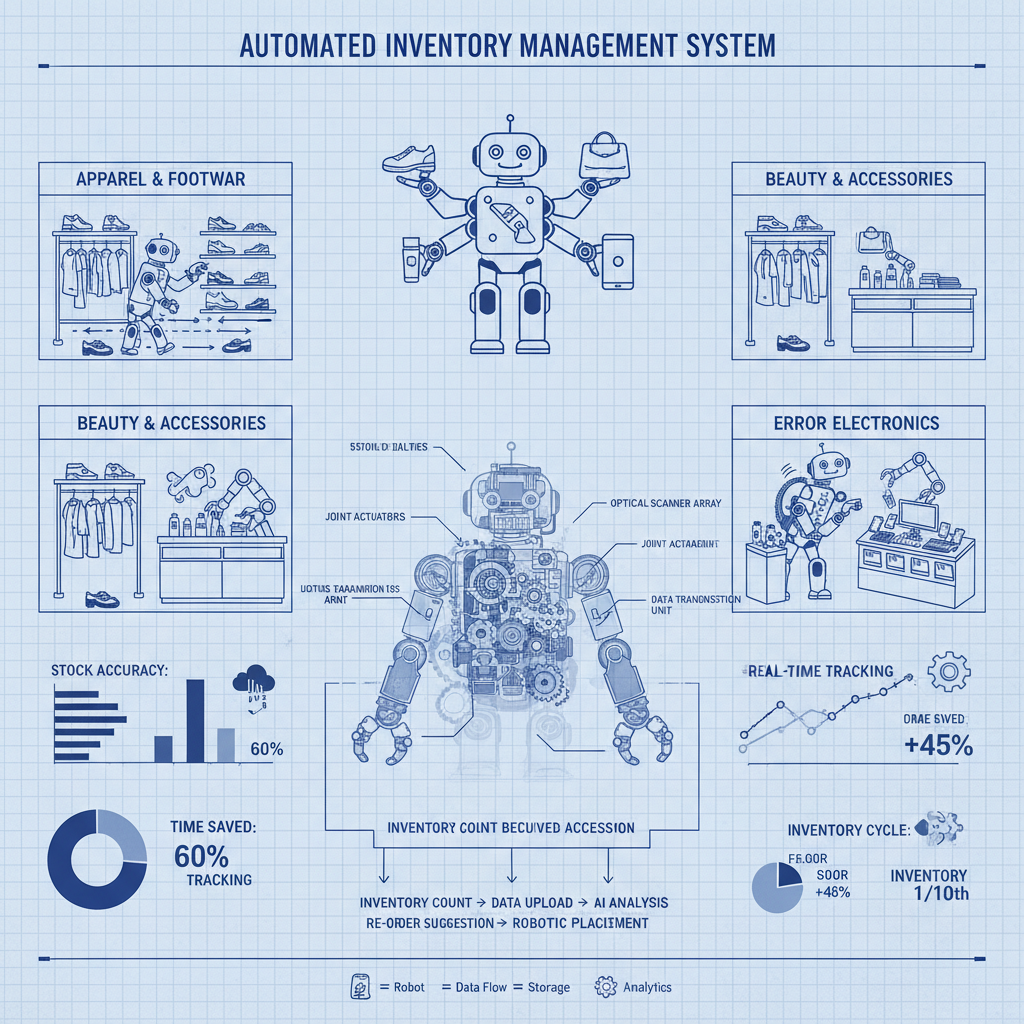
The core function is to automate tasks that were traditionally performed manually. This includes identifying items, counting quantities, tracking locations, and moving stock between different areas. By leveraging sensors, cameras, and sophisticated software, these robots can perform these tasks with a high degree of accuracy and speed, minimizing errors and maximizing efficiency.
This technology connects directly to the broader goals of modern supply chain management: reducing costs, improving customer satisfaction, and ensuring product availability. In an increasingly competitive global landscape, the ability to accurately and efficiently manage inventory is no longer a luxury, but a necessity for survival.
Core Components of Effective Robotic Stock Systems
Several key factors contribute to the success of robots for stock-taking and stock management systems. Accuracy is paramount, as inaccurate inventory data can lead to lost sales, dissatisfied customers, and inefficient operations. Robotic systems, equipped with advanced sensors and computer vision, deliver a far higher level of accuracy than manual methods.
Scalability is another crucial element. Businesses need solutions that can adapt to changing inventory levels and growing demands. Modular robotic systems, capable of being easily expanded or reconfigured, offer the flexibility needed to accommodate future growth. A system that’s difficult to scale will quickly become a bottleneck.
Integration with existing Warehouse Management Systems (WMS) is vital. Seamless data exchange between robots and the WMS ensures real-time visibility into stock levels and optimizes inventory control. Without proper integration, the benefits of robotic automation can be significantly diminished. Finally, Reliability is essential; downtime can disrupt operations and negate any efficiency gains.
Global Applications and Use Cases
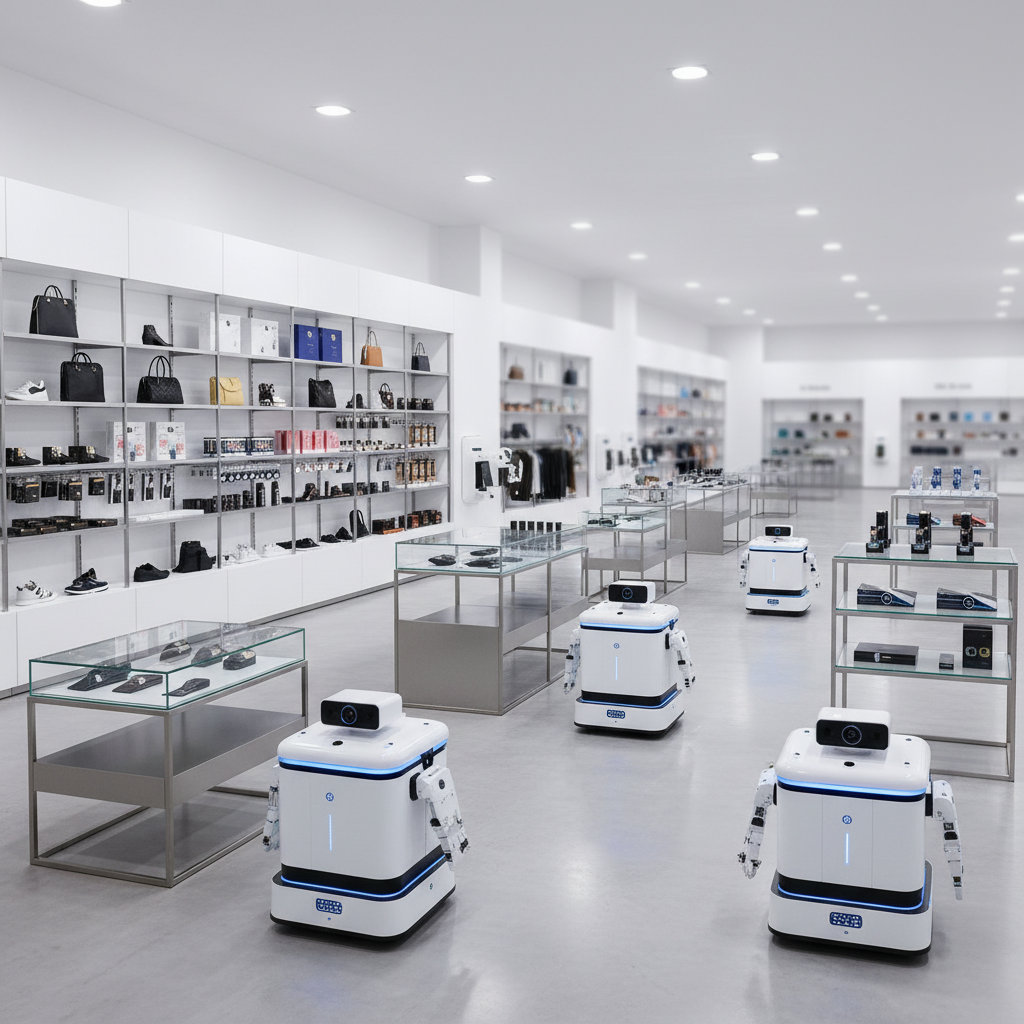
The applications of robots for stock-taking and stock management are diverse and span numerous industries. In retail, robots are used to monitor shelf stock, identify out-of-stock items, and optimize product placement. This helps to ensure that customers can always find what they’re looking for, improving the shopping experience and driving sales.
In warehousing and logistics, robots automate tasks such as picking, packing, and sorting, significantly speeding up order fulfillment and reducing labor costs. E-commerce giants like Amazon are at the forefront of this trend, utilizing vast fleets of robots to manage their massive inventory. The automotive industry also leverages robotic systems for just-in-time inventory management, ensuring that parts are available when needed without tying up excessive capital.
Beyond these core applications, robots are being deployed in healthcare facilities to manage pharmaceutical supplies, in manufacturing plants to track components, and even in libraries to locate and retrieve books. The versatility of these systems makes them a valuable asset to any organization that needs to efficiently manage its inventory.
Robotic Stock Management Method Comparison
Advantages and Long-Term Value Proposition
The benefits of adopting robots for stock-taking and stock management extend far beyond simple cost savings. While reduced labor costs are a significant advantage, the real value lies in the increased accuracy, efficiency, and resilience of the supply chain. This translates into improved customer satisfaction, reduced waste, and a stronger competitive position.
From a sustainability perspective, robotic automation can also contribute to a greener supply chain. By optimizing inventory levels and reducing the need for frequent deliveries, businesses can minimize their carbon footprint. Furthermore, robotic systems often operate with greater precision than humans, reducing the risk of damage to goods and minimizing waste.
Future Trends and Innovations in Robotic Stock Management
The future of robots for stock-taking and stock management is poised for even greater innovation. Advances in artificial intelligence and machine learning are enabling robots to become more autonomous and adaptable, capable of handling increasingly complex tasks. The development of collaborative robots, or "cobots," designed to work safely alongside human employees, will further blur the lines between automation and human labor.
Another key trend is the integration of robotics with the Internet of Things (IoT). By connecting robots to a network of sensors and devices, businesses can gain real-time visibility into every aspect of their inventory management process. This data-driven approach will enable them to optimize their operations, anticipate demand, and respond more quickly to changing market conditions.
We can also expect to see the emergence of new robotic platforms designed for specific industries and applications. For example, robots tailored for the unique challenges of cold chain logistics or pharmaceutical inventory management.
Challenges and Solutions in Implementation
Despite the numerous benefits, implementing robots for stock-taking and stock management isn't without its challenges. The initial investment cost can be substantial, requiring careful consideration of ROI and long-term benefits. Integrating robotic systems with existing infrastructure can also be complex, requiring expertise in software development and systems integration.
Another challenge is the need for skilled personnel to operate and maintain the robotic systems. Businesses may need to invest in training programs or hire specialized technicians. To overcome these hurdles, a phased implementation approach is often recommended, starting with a pilot project to test the technology and refine the integration process.
Careful planning, thorough assessment of needs, and a collaborative approach involving all stakeholders are essential for successful implementation. Leveraging the expertise of experienced robotics vendors and system integrators can also significantly reduce the risks and maximize the benefits.
Summary of Challenges and Solutions
| Challenge |
Impact on Stock Management |
Potential Solution |
Implementation Cost (1-10) |
| High Initial Investment |
Delayed ROI, potential budget constraints |
Phased implementation, leasing options |
7 |
| Integration Complexity |
Data silos, system incompatibility |
API integration, middleware solutions |
6 |
| Skill Gap |
Insufficient operational expertise |
Training programs, outsourced maintenance |
5 |
| Safety Concerns |
Risk of accidents, potential injuries |
Safety sensors, collision avoidance systems |
8 |
| Data Security |
Vulnerability to cyberattacks, data breaches |
Robust cybersecurity protocols, data encryption |
7 |
| Scalability Limitations |
Inability to adapt to growing business needs |
Modular robotic systems, flexible architecture |
4 |
FAQS
The ROI varies significantly depending on factors like the size of the operation, the complexity of the inventory, and the specific robotic solutions employed. However, businesses typically see a return within 18-36 months, driven by reduced labor costs, increased accuracy, and improved efficiency. Careful cost-benefit analysis is crucial before implementation.
Integration complexity depends on the WMS’s openness and the robotic system’s compatibility. Modern robotic solutions often offer APIs for seamless integration. However, some level of custom development may be necessary. Choosing a robotics vendor with integration expertise is highly recommended to minimize disruption.
Safety is a top priority. Robots are equipped with various safety features, including sensors, emergency stop buttons, and collision avoidance systems. Collaborative robots ("cobots") are specifically designed to work alongside humans safely. Proper training for employees is also essential.
Maintenance typically involves regular inspections, software updates, and component replacements. The cost depends on the complexity of the system and the level of service agreement. Preventative maintenance plans can minimize downtime and extend the lifespan of the robots. Expect annual maintenance costs to range from 5-10% of the initial investment.
Most modern robotic systems are designed to handle a range of product types and sizes. However, some adjustments may be required for extremely delicate or oversized items. Grippers and end-of-arm tooling can be customized to accommodate specific product characteristics. Selecting a versatile robotic system is key.
Data security is crucial. Robots generate and transmit data about inventory levels and movements, which must be protected from unauthorized access. Implementing robust cybersecurity protocols, encrypting data, and ensuring compliance with data privacy regulations are essential safeguards.
Conclusion
In conclusion, robots for stock-taking and stock management represent a paradigm shift in inventory control. By automating tedious tasks, improving accuracy, and enhancing efficiency, these systems are transforming businesses across a wide range of industries. The benefits extend beyond cost savings to encompass sustainability, improved customer satisfaction, and a stronger competitive position.
Looking ahead, the continued advancement of robotics and artificial intelligence promises even more sophisticated and versatile solutions. Businesses that embrace this technology will be well-positioned to thrive in the increasingly competitive global market. Visit our website at www.chshopdisplay.com to learn more about how we can help you implement a robotic stock management system tailored to your specific needs.