Service robots are rapidly transforming industries worldwide, extending beyond traditional manufacturing into diverse sectors like logistics, healthcare, hospitality, and retail. These intelligent machines, equipped with sensors, actuators, and advanced algorithms, are designed to assist humans in performing tasks that are repetitive, dangerous, or physically demanding. This increasing adoption is fueled by factors such as rising labor costs, advancements in artificial intelligence, and a growing demand for increased efficiency and productivity. Understanding the capabilities and applications of service robots is crucial for businesses looking to stay competitive in today’s evolving landscape.
The global service robotics market is experiencing exponential growth, with projections indicating a substantial increase in value over the next decade. According to recent reports, the market is driven by the need for automation, particularly in aging populations and labor-shortage areas. The development and deployment of service robots are not merely technological advancements, but also present significant economic and societal implications. Addressing ethical considerations and workforce transitions associated with automation is vital for ensuring sustainable and equitable growth.
The integration of service robots offers a pathway towards greater operational resilience, improved safety standards, and enhanced customer experiences. This trend is impacting how businesses operate, innovate, and interact with their customers, requiring a proactive approach to understanding and leveraging this transformative technology.
The Evolution and Significance of Service Robots
The development of service robots is rooted in decades of research in robotics, artificial intelligence, and sensor technology. Initially confined to industrial automation, the concept has expanded dramatically with advances in processing power, battery life, and AI algorithms. The first practical service robots were predominantly found in niche applications, but their growing sophistication and affordability have led to wider adoption across numerous sectors.
The significance of service robots lies in their ability to augment human capabilities, improve efficiency, and address challenges related to labor shortages and safety. Their use extends beyond mere task automation, enabling new business models, and enhancing overall productivity. As the global population ages and demand for personalized services increases, the role of service robots will only become more critical.
Defining Service Robots and Their Role
Service robots are defined as autonomous or semi-autonomous machines designed to perform tasks typically carried out by humans, but with a focus on assisting and interacting with people. Unlike industrial robots, which operate in controlled environments and perform repetitive tasks, service robots often operate in dynamic and unpredictable settings, requiring a higher degree of adaptability and intelligence. This differentiation is crucial when considering applications and technical requirements.
Their role extends across a wide spectrum, encompassing tasks such as cleaning, delivery, customer service, healthcare assistance, and security surveillance. They are designed to provide value by improving efficiency, reducing costs, enhancing safety, and creating new possibilities in various industries. The functionality of service robots is largely dictated by their specific programming and the sensors they employ to perceive their environment.
The connection to modern industry and humanitarian needs is becoming increasingly apparent. For example, in healthcare, service robots are assisting with patient care, dispensing medication, and performing remote monitoring. In disaster relief situations, they can be deployed to search for survivors, deliver supplies, and assess damage in hazardous environments. The expanding use of service robots highlights their potential to address critical societal challenges.
Core Components and Capabilities of Service Robots
Several key components define the capabilities of service robots. Firstly, advanced sensors – including cameras, LiDAR, ultrasonic sensors, and tactile sensors – provide the robot with the ability to perceive its surroundings. Secondly, powerful processing units and sophisticated algorithms enable them to interpret sensor data, plan actions, and navigate complex environments. The effectiveness of a service robot relies heavily on the integration and performance of these components.
Furthermore, effective locomotion systems – whether wheeled, tracked, or legged – are essential for mobility. The choice of locomotion depends on the specific application and the terrain the robot must traverse. Finally, a robust power supply, often utilizing advanced battery technology, is critical for ensuring prolonged operational time. These components work in unison to facilitate autonomous or semi-autonomous operation.
Key capabilities that arise from these components include autonomous navigation, object recognition, speech recognition, manipulation, and human-robot interaction. The degree of sophistication in each of these areas varies depending on the robot’s design and intended purpose. Continued advancements in AI and machine learning are constantly expanding these capabilities, enabling service robots to perform more complex and nuanced tasks.
Key Performance Indicators for Service Robots
Evaluating the performance of service robots requires a comprehensive set of key performance indicators (KPIs). Reliability, measured by mean time between failures (MTBF), is a crucial indicator of robustness and operational uptime. Task completion rate, quantifying the percentage of tasks successfully performed, reflects the robot’s effectiveness in its designated role.
Navigation accuracy, assessed by the precision of path planning and obstacle avoidance, is vital for safe and efficient operation. Energy efficiency, measured by battery life and power consumption, directly impacts operational costs and environmental sustainability. Furthermore, human-robot interaction quality, evaluated through user feedback and engagement metrics, is crucial for ensuring positive user experiences.
Service Robot Performance Metrics
Global Applications of Service Robots
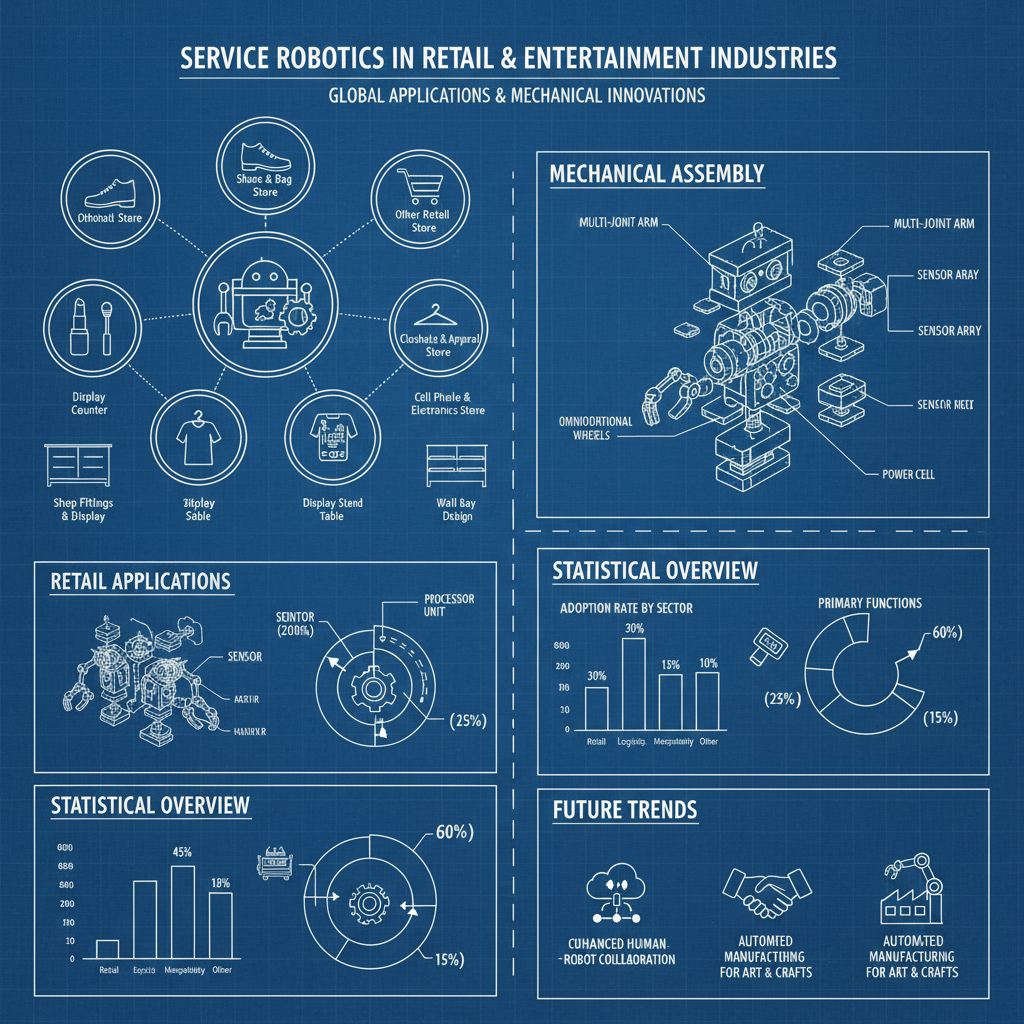
The application of service robots is becoming increasingly widespread across the globe. In healthcare, they are used for surgery assistance, medication delivery, and patient rehabilitation, particularly in countries with aging populations like Japan and Germany. In the logistics sector, robots are automating warehouse operations, fulfilling orders, and last-mile delivery, significantly impacting supply chain efficiency.
In hospitality, robots are employed for room service, concierge duties, and cleaning, enhancing customer experiences in hotels and resorts. Furthermore, in the security sector, robots are patrolling facilities, monitoring surveillance footage, and responding to incidents, boosting safety and security levels. These implementations are prevalent in both developed and developing countries, adapting to local needs and infrastructure.
The Advantages and Long-Term Value of Service Robots
The advantages of adopting service robots are multifaceted. From a cost perspective, they can reduce labor costs, improve efficiency, and minimize errors. Sustainability benefits include reduced energy consumption and waste through optimized operations. Socially, service robots can enhance safety by taking on hazardous tasks and improving the quality of life for individuals with disabilities or mobility challenges.
Long-term value is derived from increased productivity, improved customer satisfaction, and the creation of new business opportunities. By automating routine tasks, humans can focus on more complex and creative endeavors. The emotional benefit of reduced physical strain and increased safety contributes to a more positive work environment, fostering innovation and trust. The growing availability of service robots will continue to drive these positive impacts.
Moreover, implementing service robots demonstrates a commitment to innovation and technological advancement, enhancing a company’s reputation and attracting skilled talent. This forward-thinking approach can establish a competitive edge in an increasingly automated world.
Future Trends and Challenges in Service Robotics
The future of service robotics is poised for rapid innovation, driven by advancements in artificial intelligence, machine learning, and materials science. We can expect to see more sophisticated robots with improved cognitive abilities, enhanced sensor capabilities, and greater adaptability. The integration of 5G technology will enable faster data transfer and real-time control, unlocking new possibilities for remote operation and collaboration.
A key trend is the development of collaborative robots (cobots), designed to work safely alongside humans in shared workspaces. Furthermore, the increasing focus on sustainability is driving the development of energy-efficient robots and the use of eco-friendly materials. The adoption of cloud robotics will enable robots to access vast amounts of data and processing power, enhancing their intelligence and capabilities.
However, several challenges remain. These include the need for improved battery life, lower costs, and enhanced cybersecurity measures. Addressing ethical concerns related to job displacement and data privacy is also crucial for ensuring responsible deployment. Overcoming these challenges will be vital for realizing the full potential of service robotics.
Summary of Key Challenges in Service Robotics
| Challenge Area |
Impact on Service Robots |
Potential Solutions |
Implementation Timeline |
| Cost of Development |
Limits accessibility and adoption for smaller businesses |
Modular design, open-source platforms, standardized components |
Short-term (1-2 years) |
| Battery Life |
Restricts operational time and necessitates frequent recharging |
Advanced battery technologies (solid-state, graphene), energy harvesting |
Medium-term (3-5 years) |
| Cybersecurity |
Vulnerability to hacking and data breaches, compromising safety and privacy |
Robust encryption, secure communication protocols, intrusion detection systems |
Ongoing (continuous improvement) |
| Ethical Considerations |
Job displacement, bias in algorithms, privacy concerns |
Retraining programs, transparent AI, data anonymization |
Long-term (5+ years) |
| Regulatory Frameworks |
Lack of clear guidelines for safe and responsible deployment |
Development of industry standards and government regulations |
Medium-term (3-5 years) |
| Human-Robot Interaction |
Difficulty in creating intuitive and seamless interactions |
Advancements in natural language processing, gesture recognition, and emotional AI |
Medium-term (3-5 years) |
FAQS
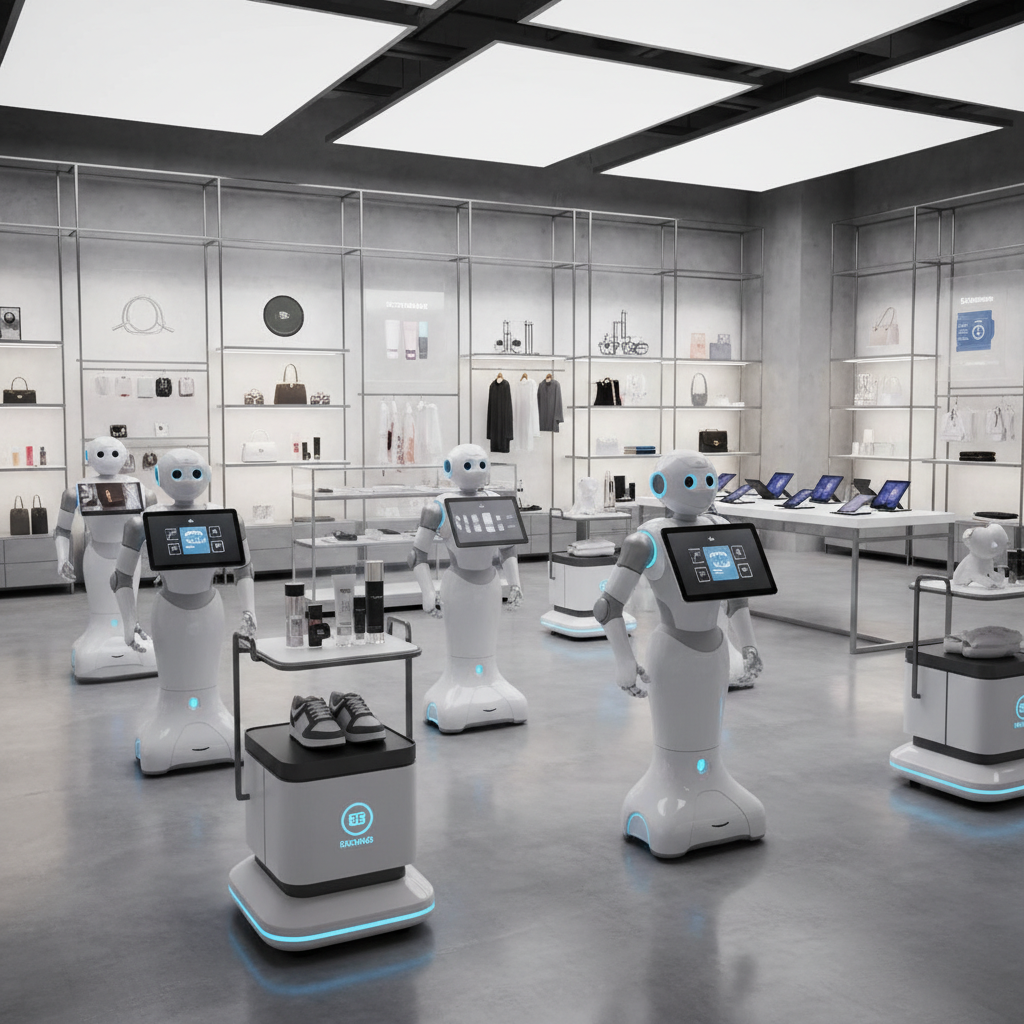
Implementing service robots in retail offers numerous benefits, including improved customer service through personalized assistance, increased operational efficiency by automating tasks like inventory management and cleaning, and reduced labor costs. Moreover, robots can enhance the overall shopping experience and provide a competitive edge by showcasing technological innovation. The integration of service robots can lead to higher customer satisfaction and increased sales.
Safety is a paramount concern in service robot design. Robots are typically equipped with a range of sensors, including LiDAR, cameras, and ultrasonic sensors, to perceive their surroundings and avoid collisions. They also employ sophisticated algorithms for path planning and obstacle avoidance. Furthermore, many robots are designed with soft materials and rounded edges to minimize the risk of injury. Regular safety checks and adherence to industry standards are essential for ensuring safe operation.
The cost of deploying and maintaining service robots varies significantly depending on the robot’s complexity, features, and application. Initial costs include the robot’s purchase price, installation fees, and integration with existing systems. Ongoing maintenance costs include software updates, sensor calibration, and potential repairs. However, the long-term cost savings from reduced labor costs, increased efficiency, and improved accuracy can often outweigh the initial investment.
Several ethical considerations arise with the use of service robots, including potential job displacement, data privacy concerns, and algorithmic bias. It's important to address these issues proactively through retraining programs for affected workers, robust data security measures, and the development of fair and transparent algorithms. Responsible deployment of service robots requires careful consideration of their societal impact.
The ease of integration varies depending on the complexity of the robot and the existing infrastructure. Many service robot manufacturers offer integration services and APIs (Application Programming Interfaces) to facilitate seamless connection with existing systems. A thorough assessment of current workflows and a well-defined integration plan are crucial for successful deployment. Often, a phased implementation approach is recommended.
Long-term trends in service robotics include advancements in artificial intelligence, particularly in areas like machine learning and natural language processing, leading to more autonomous and intelligent robots. We can also expect to see increased collaboration between humans and robots (cobots), the development of more affordable and accessible robots, and the expansion of service robotics into new industries and applications. The future of service robots is bright and full of potential.
Conclusion
Service robots represent a transformative technology with the potential to revolutionize industries and improve countless aspects of our lives. From enhancing efficiency and productivity to improving safety and accessibility, the benefits are far-reaching. Understanding the core components, applications, and future trends of service robotics is critical for businesses and individuals alike, as these machines become increasingly integrated into our daily routines. service robots are no longer a futuristic fantasy but a present-day reality.
Looking ahead, continued innovation and responsible deployment are essential for unlocking the full potential of service robotics. By addressing ethical concerns, investing in research and development, and fostering collaboration between humans and machines, we can ensure that this technology is used to create a more sustainable, equitable, and prosperous future. Embracing service robotics is not just about adopting a new technology; it’s about embracing a new era of automation and intelligence.