The ubiquitous sales counter is a fundamental element of modern commerce, extending far beyond simply totaling purchases. From bustling retail environments to innovative self-service kiosks, and even within complex logistical systems, the sales counter serves as the critical interface between provider and customer. Its evolution reflects broader trends in technology, customer experience, and data analytics, making it a key indicator of economic activity and consumer behavior globally.
The global relevance of the sales counter is immense. According to the United Nations Conference on Trade and Development (UNCTAD), retail sales represent a significant portion of global GDP, and the efficiency of transaction processing – a core function of the sales counter – directly impacts economic growth. In developing nations, access to even basic sales counter technologies can empower small businesses and facilitate financial inclusion. The International Organization for Standardization (ISO) continues to develop standards for secure payment systems, further highlighting the importance of reliable sales counter infrastructure.
The challenge lies in adapting the sales counter to meet evolving consumer expectations and technological advancements. Traditional counters are often static and limited in functionality, struggling to provide the personalized and seamless experiences that modern customers demand. This necessitates a shift towards more flexible, integrated, and data-driven sales counter solutions that can optimize operations and enhance customer satisfaction.
The Fundamental Role of the sales counter
At its core, the sales counter functions as the point of transaction, facilitating the exchange of goods or services for payment. However, its role extends far beyond this simple definition. It serves as a vital information hub, providing customers with details about products, pricing, and promotions. A well-designed sales counter also contributes to brand image and customer experience, creating a positive first impression and fostering loyalty.
Modern sales counters are increasingly integrated with broader business systems, enabling real-time inventory management, customer relationship management (CRM), and data analytics. This integration allows businesses to gain valuable insights into consumer behavior, optimize pricing strategies, and improve overall operational efficiency.
Defining the Modern sales counter
The modern sales counter isn't just a physical structure; it’s a dynamic ecosystem of hardware and software working in concert. This can range from traditional cash registers and barcode scanners to sophisticated point-of-sale (POS) systems, touchscreen displays, and integrated payment terminals. It increasingly includes elements of self-service, such as self-checkout kiosks and mobile payment options.
The key to a modern sales counter lies in its adaptability and integration. Seamless connectivity to inventory management systems, accounting software, and customer databases is crucial. It needs to be capable of handling a variety of payment methods, including cash, credit cards, debit cards, mobile wallets, and even cryptocurrency. Furthermore, the counter should be designed with user experience in mind, ensuring ease of use for both employees and customers.
Ultimately, a well-defined modern sales counter facilitates a frictionless and efficient transaction process, contributing to enhanced customer satisfaction and increased business profitability.
Core Components of an Effective sales counter
An effective sales counter relies on several core components working harmoniously. First and foremost is the Point of Sale (POS) system itself – the software that manages transactions, inventory, and customer data. This is often coupled with robust hardware, including a reliable cash drawer, barcode scanner, and receipt printer. Security is paramount, necessitating secure payment processing and data encryption to protect sensitive customer information.
Beyond the core hardware and software, an effective sales counter also requires a well-trained and knowledgeable staff. Employees need to be proficient in operating the POS system, handling cash and payment processing, and providing excellent customer service. Finally, a streamlined workflow and ergonomic design are essential to maximize efficiency and minimize employee fatigue.
The integration of these components – technology, personnel, and process – is what truly defines an effective sales counter, enabling businesses to deliver a seamless and satisfying customer experience.
Key Factors Influencing sales counter Performance
Several key factors contribute to the overall performance of a sales counter. Durability is crucial, particularly in high-traffic environments. The counter and its components must be able to withstand constant use and potential wear and tear. Scalability is another important consideration, allowing businesses to adapt to changing needs and growth.
Cost-efficiency is also a significant factor. Businesses need to balance the cost of implementing and maintaining a sales counter system with the potential benefits, such as increased efficiency and improved customer satisfaction. Usability and ease of maintenance are critical – a complex or unreliable system can lead to frustration and lost productivity.
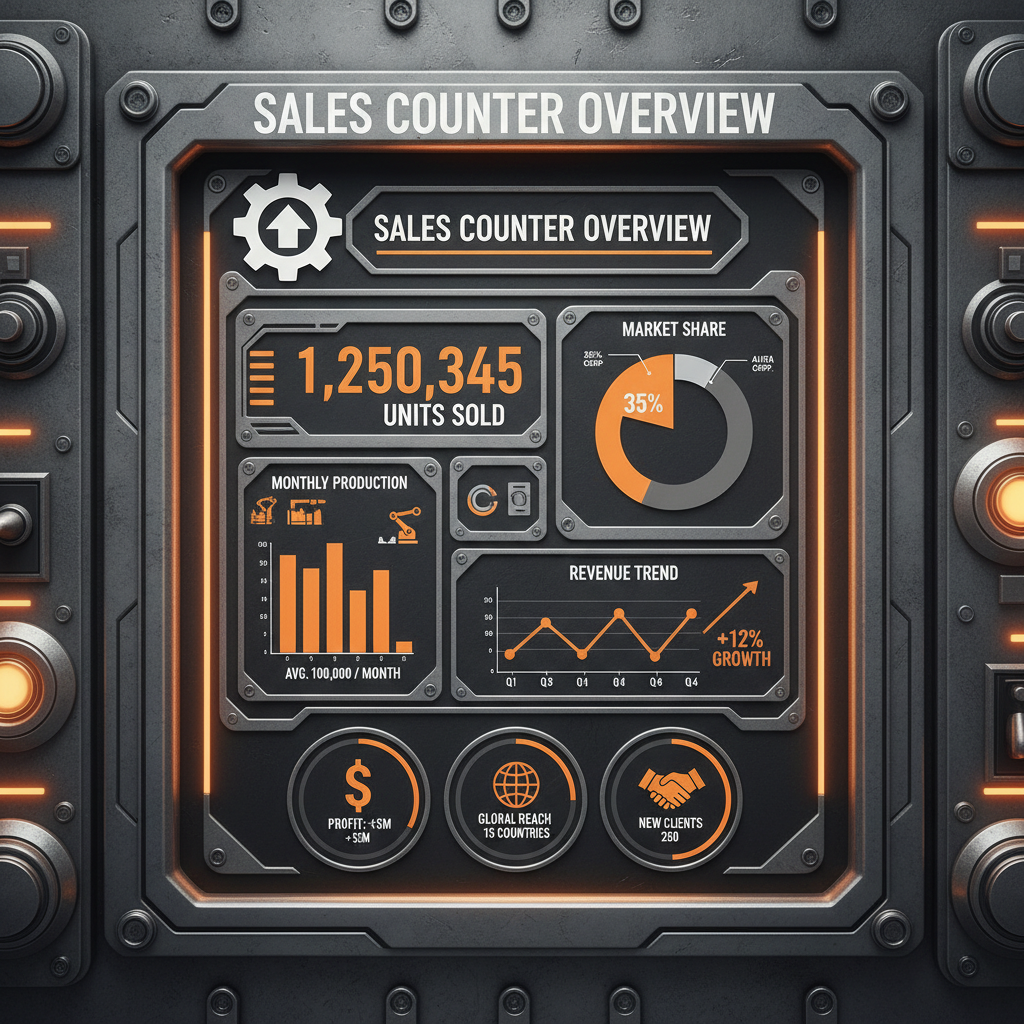
sales counter Performance Metrics
Global Applications of the sales counter
The applications of the sales counter are incredibly diverse, spanning virtually every industry and geographic region. In retail, from large department stores to small boutiques, it's the central hub for processing transactions and managing customer interactions. In hospitality, sales counters are essential for hotels, restaurants, and bars, facilitating check-ins, ordering, and payment.
Beyond traditional retail and hospitality, sales counters play a critical role in a wide range of other sectors. They are used in healthcare facilities for billing and payment processing, in transportation hubs for ticket sales, and in government agencies for collecting fees and providing services. Even in remote industrial zones, portable sales counter solutions are utilized for managing transactions and tracking inventory.
Advantages and Long-Term Value of the sales counter
The advantages of investing in a robust sales counter system are numerous. Tangible benefits include reduced transaction times, improved inventory accuracy, and streamlined accounting processes, leading to significant cost savings. The ability to collect and analyze customer data allows businesses to personalize marketing efforts and improve customer retention.
The long-term value extends beyond mere financial gains. A well-designed sales counter can enhance brand image, create a positive customer experience, and foster loyalty. It provides a secure and reliable platform for processing transactions, building trust with customers. Furthermore, by automating tasks and providing valuable data insights, the sales counter empowers businesses to innovate and stay ahead of the competition.
Future Trends and Innovations in sales counter Technology
The future of the sales counter is poised for significant transformation. One key trend is the integration of Artificial Intelligence (AI) and Machine Learning (ML) to personalize the customer experience and optimize operations. Biometric authentication methods, such as facial recognition and fingerprint scanning, are expected to become more prevalent, enhancing security and streamlining the checkout process.
Another emerging trend is the rise of contactless payment technologies, driven by the demand for faster and more hygienic transactions. The increasing adoption of cloud-based POS systems offers greater flexibility and scalability, allowing businesses to access data and manage operations from anywhere. Sustainability is also becoming a major focus, with manufacturers developing eco-friendly sales counter materials and energy-efficient designs.
Challenges and Solutions in sales counter Implementation
Despite the numerous benefits, implementing and maintaining an effective sales counter system can present several challenges. Data security is a constant concern, requiring robust security measures to protect sensitive customer information. Integration with existing business systems can be complex and time-consuming. Keeping up with rapidly evolving technology and ensuring staff training are also ongoing challenges.
To overcome these challenges, businesses should prioritize security protocols, invest in scalable and flexible systems, and provide comprehensive training to employees. Regular software updates and security audits are essential to protect against emerging threats. Working with a reputable vendor that provides ongoing support and maintenance can also help ensure a smooth and successful implementation.
A Comparative Analysis of Sales Counter Solutions
| Solution Type |
Implementation Cost |
Scalability |
Security Level |
| Traditional POS System |
$2,000 - $5,000 |
Moderate |
Medium |
| Cloud-Based POS System |
$50 - $200/month |
High |
High |
| Mobile POS System |
$100 - $500 + Transaction Fees |
Very High |
Medium |
| Self-Checkout Kiosk |
$5,000 - $15,000 per kiosk |
Moderate |
Medium - High |
| Integrated Retail Management Suite |
$10,000+ |
Very High |
Very High |
| Open-Source POS System |
$0 - $2,000 (Implementation) |
Variable |
Low - High (depending on configuration) |
FAQS
Traditional POS systems typically involve on-premise servers and software, requiring significant upfront investment and ongoing maintenance. Cloud-based systems, conversely, operate on a subscription model, offering greater scalability, accessibility, and reduced IT overhead. Cloud systems also often feature automatic updates and enhanced security features, providing a more agile and cost-effective solution for many businesses. The accessibility of cloud POS also means businesses can track sales and manage inventory remotely.
Data security is paramount. Implement strong password policies, encrypt sensitive data, and ensure your POS system is PCI DSS compliant. Regularly update your software to patch security vulnerabilities and consider utilizing tokenization to protect customer credit card information. Employee training on data security best practices is also crucial. Consider two-factor authentication for administrative access.
Integrating your sales counter with other systems streamlines operations and provides a holistic view of your business. Real-time inventory updates prevent stockouts and overstocking, while CRM integration enables personalized marketing and improved customer service. Automated data flow reduces manual errors and saves valuable time, leading to increased efficiency and profitability.
Consider your business needs and transaction volume. Durability is key, especially in high-traffic environments. Choose hardware that is ergonomically designed for employee comfort and efficiency. Ensure compatibility with your chosen POS software and factor in future scalability. Don't forget essential peripherals like barcode scanners, receipt printers, and cash drawers.
Comprehensive training is essential for successful implementation. Provide hands-on training sessions, create user manuals, and offer ongoing support. Focus on practical scenarios and address common challenges. Encourage staff to ask questions and provide feedback. Consider designating a “super user” who can assist colleagues with troubleshooting.
Modern systems can yield significant cost savings through increased efficiency, reduced errors, and improved inventory management. Automation of tasks frees up staff time, while data analytics enable optimized pricing and marketing strategies. Reduced shrinkage from improved inventory control also contributes to cost savings. Furthermore, cloud-based solutions can eliminate the need for expensive on-premise hardware and IT maintenance.
Conclusion
In conclusion, the sales counter is far more than just a transactional point; it's a critical component of modern commerce, impacting efficiency, customer experience, and data-driven decision-making. From its fundamental role in facilitating exchange to its evolving integration with innovative technologies like AI and cloud computing, the sales counter continues to adapt and drive business success. Understanding its core components, global applications, and future trends is paramount for businesses seeking to thrive in today's competitive landscape.
Investing in a robust and forward-thinking sales counter solution is not simply a cost, but a strategic investment in long-term growth and sustainability. As technology continues to evolve, businesses must remain adaptable and embrace innovation to leverage the full potential of the sales counter. Visit our website at www.chshopdisplay.com to explore our range of cutting-edge sales counter solutions and discover how we can help you optimize your operations and enhance customer satisfaction.