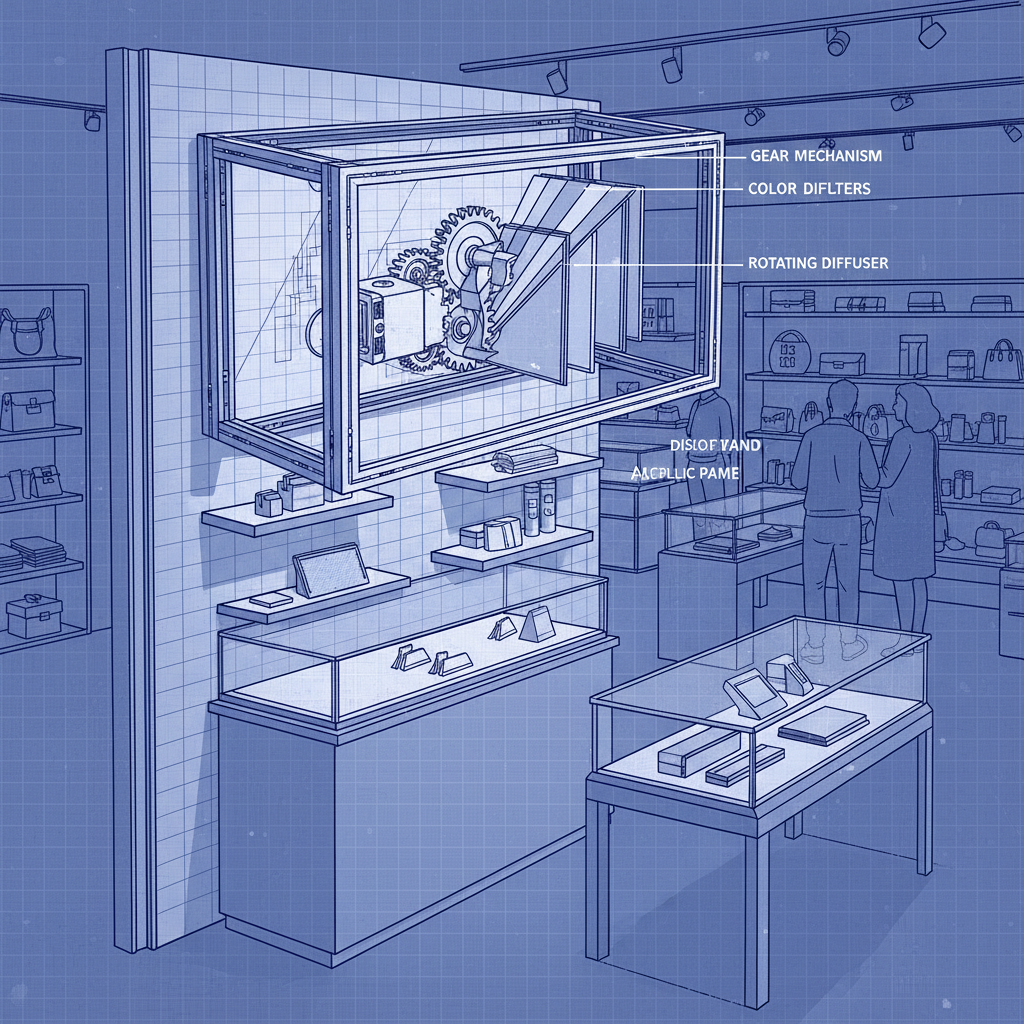
Selecting the right shopfitting company is a critical strategic decision for any retail business looking to translate brand identity into a physical environment. In the specialized sector of arts, crafts, and high-end retail manufacturing, the intersection of aesthetic appeal and functional durability determines the success of a storefront's customer flow and conversion rates.
Retailers often struggle with the gap between architectural design and actual fabrication, leading to delays, material failure, or poor spatial utilization. Whether opening a cosmetics boutique or a high-tech electronics store, the primary challenge lies in finding a partner capable of integrating custom woodwork, metalwork, and precise logistics into a seamless installation.
This professional analysis provides a comprehensive framework for evaluating shopfitting capabilities, focusing on the technical requirements of store fixtures, the logistics of rapid deployment, and the critical selection criteria for long-term operational success in the retail space.

Core Capabilities of a Full-Service Shopfitting Company

A comprehensive shopfitting company must offer more than just the assembly of shelves; it requires a vertically integrated approach that encompasses design, manufacturing, and on-site build-out. For brand enterprises, the ability to provide a "one-stop shop solution" is essential to avoid the fragmentation that occurs when hiring separate designers and contractors. This integration ensures that the original design intent is maintained through the fabrication process and successfully implemented on the shop floor.
True expertise is evidenced by the capacity to handle both large-scale rollouts and highly personalized, small-lot orders. By utilizing dedicated R&D departments and specialized workshops, a provider can offer differentiated services that adapt to specific brand guidelines while maintaining the economic efficiencies of industrial production.
Material Engineering: Wood, Metal, and Plastic Integration
The structural integrity and visual quality of store fixtures depend on the synergistic use of materials. Professional shopfitting involves the precise application of MDF and solid wood for warmth and structure, coupled with metal for load-bearing capacity and industrial aesthetics. The inclusion of PC (polycarbonate) and plastic workshops allows for the creation of specialized lighting elements and transparent display components that are essential for modern retail.
Advanced production equipment, such as CNC nesting machines and 6-sided drilling centers, ensures that components are manufactured with millimeter precision. This technical capability is what allows a shopfitting company to deliver customized sizes and colors that fit perfectly into a pre-defined architectural space, reducing the need for on-site modifications and minimizing installation time.
Sector-Specific Fixture Requirements
Different retail sectors demand distinct functional priorities. For instance, Cell Phone and Electronics stores require high-security display counters and integrated cable management, whereas Clothes and Apparel stores focus on wall bay flexibility and high-capacity clothing racks. Cosmetics and Shoes & Bag stores necessitate a high degree of lighting integration and specialized shelving to highlight product textures and colors.
Beyond the core retail sectors, the application of shopfitting extends to snack, candy, and grocery stores, where the emphasis shifts toward durability and ease of cleaning. A versatile manufacturer provides specialized display tables and floor stands that are optimized for the specific weight and turnover rates of these product categories, ensuring the store remains operational under high-traffic conditions.
Deployment Efficiency and Logistics Framework
The true cost of a store fit-out is often tied to the duration of the construction phase. Reducing the time from factory delivery to store opening is a primary goal for retail operators. This is achieved through a sophisticated logistics management system involving centralized warehousing and a network of branch offices that can coordinate rapid local installation. When a company manages the entire flow—from powder coating to final assembly—they can significantly compress the project timeline.
The illustrative framework above demonstrates the relative impact of different operational capacities on the overall project timeline. By integrating CNC automation and a robust logistics network, a shopfitting company can reduce the "Design-to-Store" window, allowing brands to capitalize on market opportunities faster.
Evaluating Fabrication Quality and QC Standards
Quality control in shopfitting is not a final step but a continuous process. Rigorous QC must begin with the inspection of raw materials—such as the grade of MDF or the purity of the metal—and continue through every workshop phase, including the painting and powder coating stages. The goal is to ensure that the finish is consistent across thousands of units, regardless of the batch size.
A professional fabrication environment utilizes a structured flow process, where components move through specialized centers (wood, metal, plastic) before reaching a final assembly point. This systemic approach prevents the common errors associated with fragmented production and ensures that the final product arrives at the site ready for immediate installation, minimizing the risk of on-site defects.
Common Risks in Custom Store Fit-Outs
Custom shopfitting projects are susceptible to several critical risks, most notably the misalignment between 3D renders and physical reality. This usually occurs when the manufacturer lacks the internal R&D capability to test the structural viability of a design. Another significant risk is the "logistics gap," where fixtures are produced on time but arrive damaged or incomplete due to inadequate packing, such as omitting pallets or crates for fragile MDF components.
Furthermore, many retailers overlook the necessity of after-sales maintenance. Retail environments are high-wear areas; without a standardized maintenance service for facilities and equipment, the initial investment in high-quality fixtures can degrade rapidly. Selecting a partner that provides ongoing maintenance ensures the long-term sustainability of the brand's physical image.
Supplier Selection Decision Matrix
When evaluating a shopfitting company, buyers should move beyond price-per-unit and look at the total value chain. The ability to provide customized sizes, colors, and styles combined with a proven track record of on-time delivery is a stronger indicator of success than low initial quotes. The following matrix provides a conceptual comparison of different supplier types to guide the decision process.
| Supplier Type | Design Capability | Production Scale | Lead Time Risk |
|---|---|---|---|
| Local Contractor | Basic / Adaptive | Low (Manual) | Moderate |
| Specialized Factory | Technical / Precise | High (CNC) | Low |
| Full-Service Agency | Strategic / Brand | Variable (Outsourced) | Moderate |
| Integrated Manufacturer | Integrated / R&D | Very High | Very Low |
| Modular Supplier | Standardized | Mass Production | Very Low |
| Custom Artisan | High Artistic | Very Low | High |
For enterprises requiring a balance of brand uniqueness and scalable growth, the Integrated Manufacturer model—combining in-house design, a 42,000 square meter production base, and specialized logistics—offers the lowest risk profile and the highest consistency across multiple locations.
Frequently Asked Questions
A shopfitter specializes specifically in the interior fit-out of retail spaces, focusing on fixtures, displays, and brand aesthetics, whereas a general contractor handles broader construction, such as structural walls and plumbing.
Timelines vary, but integrated providers can complete full shops in approximately 17 days and smaller in-store sections in about 5 days, depending on the complexity and logistics.
Yes, professional manufacturers allow for customized sizes, colors, and material combinations, typically using MDF, wood, metal, and PC to match brand guidelines.
Costs are driven by material choice, the level of customization, the total volume of fixtures, and the complexity of the logistics and installation process.
Quality is ensured through a total-process QC system that monitors everything from raw material arrival to the final packing in crates or pallets.
Leading providers offer standardized maintenance services to ensure facilities and equipment remain in top condition throughout the store's operational life.
Conclusion
A successful retail environment is the result of a precise alignment between strategic design and industrial execution. By partnering with a shopfitting company that integrates R&D, CNC-driven manufacturing, and a robust logistics network, brands can ensure their physical stores are delivered on time, within budget, and according to exact brand specifications.
For businesses seeking high-quality, customizable store fixtures and one-stop shop solutions, detailed product specifications and capability reviews are available at www.chshopdisplay.com to support your next retail expansion.